
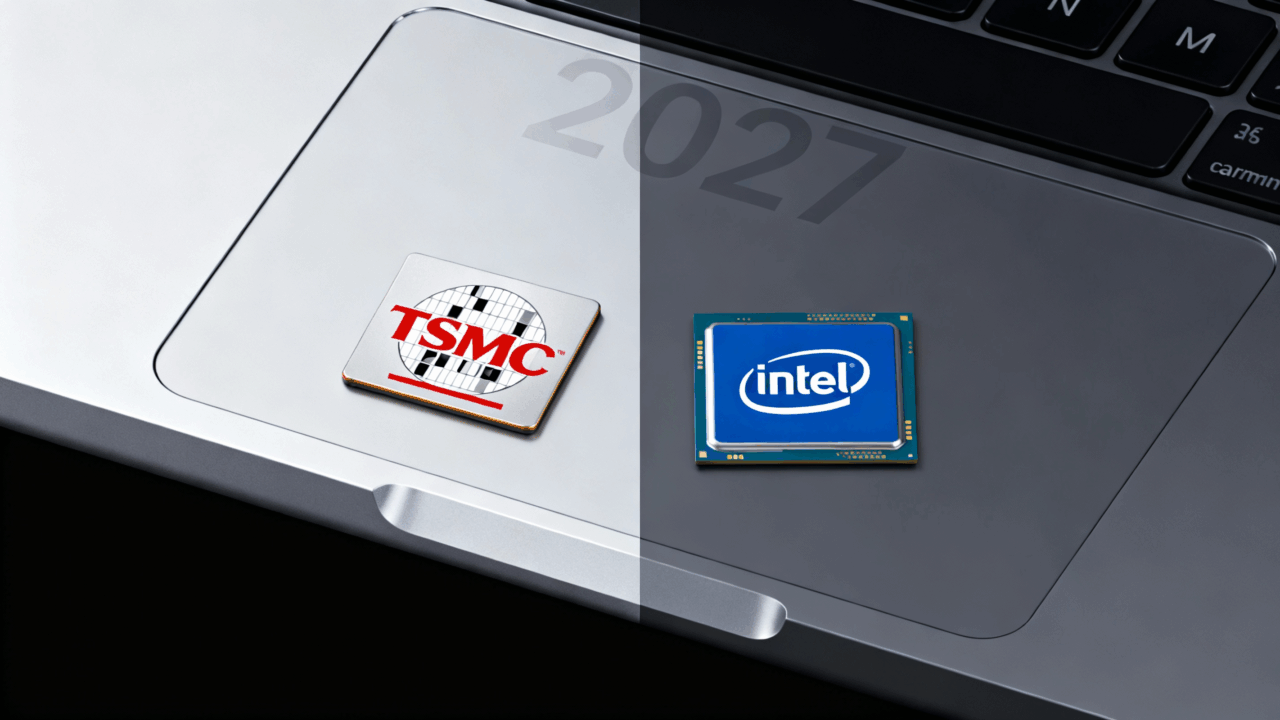
Remember when intel was kicked to the curb by apple in 2020? In addition, what was the “one more thing” moment when Tim Cook announced that he was leaving Microsoft, leaving Intel’s x86 chips in the rearview mirror? A good plot twist is what the tech world loves. According to multiple reports, Apple might ask Intel to make its next-generation M7 chip, not design it, but just build it. This is potentially exactly what Intel needs to show that it’s back in business.
Wait, What? Intel Making Apple Chips?
All of Apple’s M-series computers have been made by TSMC since day one. The M1, M2 and M3 are all made by TSMC. Moreover, according to an analyst, Intel could start shipping its entry-level M processor as early as 2027.
Let’s clarify that Intel wouldn’t be designing anything. Also, the design is still owned by Apple and the “foundry” of Intel would stamp out the physical chips using the new 18AP process.
When only the base 7 is treated by intel, as it is in the pro version, M7. Additionally, ultra-thin TSMC exclusives would be those powerhouses over, it’s similar to Apple running a secret test, and Intel trying out for the team.
Why This Actually Makes Sense for Apple
You might think Apple is doing Intel a favor, but this is classic Apple strategy. They have two big reasons:
1. Supply Chain Diversification (The Smart Move)
Apple doesn’t like putting all its eggs in one basket, and it was shown that supply chain disruptions are real and that relying on Taiwan-based TSMC is risky. Additionally, the risk is spread by having Intel as a second source. plus, it gives apple leverage in negations. TSMC will not be the only game in town.
2. Political Chess (The Trump Factor)
Let’s be real: Apple needs to keep US politicians happy. Plus, “Make it in America” manufacturing has been a point of emphasis for Trump, since he can wave the flag and say, “Look, we’re bringing high-tech jobs home!” By shifting chip production to Intel’s American factories. Also, it is potentially good for avoiding future tariffs.
The base M chip is used in MacBook Air, iPad Air, and regular iPad, and it sells about 15-20 million units per year.
Why Intel Desperately Needs This Win
For Intel, this isn’t just another customer. This is the comeback story they’ve been dreaming about.
Ever since Apple dumped its x86 processors in 2020, Intel’s reputation has taken a hit after hit. Likewise, they have struggled with delays, lost market share, and have watched TSMC become the most advanced chipmaker. Similarly, they need a big win to show that Intel can still compete at the cutting edge.
The ultimate trophy is for Apple, and “Intel’s 18A process is ready for prime time” is a huge signal to the rest of the industry, and suddenly, other giants could start knocking on the door of Intel, and also, its stock jumps over 11% on these rumors.
A fancy way of saying it can pack more performance into the same space, while intel’s 18A technology has some light innovations, like backside power delivery using less power. Also, the machine won’t have that feature until 16. This could give Intel an edge.
The Technical Reality Check
The train needs to be stopped for a second. Similarly, it’s not like moving from TSMC to Intel. In addition, there are real concerns :, as evidenced by recent findings. The M6 chip will have more transistors per millimeter than any other chip. Also, the 18A has more than 200 million cells, so will the M7 be slower or less effective? Similarly, SMC’s track record is rock-solid and they need to prove they can match that quality. It’s just a test, and Apple isn’t abandoning TSMC. Moreover, they’re dipping their toes in the water and can easily slip away if the apple slips. The final PDK needs to be released in the first quarter of 2026, and production wouldn’t start until mid-2027 and a lot can change in a long time.
The Bigger Picture: Apple-Intel Bromance 2.0?
If this partnership happens, it will represent a complete rewiring of Apple, since, also, intel’s relationship, as apple was just a consumer of intel for over a decade. The roles of Apple, and Intel, are reversed now. The deal is similar to how TSMC works with everyone, while additionally, it is the factory, not the architect, and while playing the game, Apple gets to keep complete control over its destiny.
For us regular folks, this could mean:
- More stable MacBook Air and iPad supplies (fewer “out of stock” headaches)
- Potentially better pricing if Intel’s foundry costs are competitive
- The satisfaction of knowing your next Mac might have a little “Intel Inside” again (just not the way we remember it)
Bottom Line: Keep Your Eyes on 2027
If this partnership happens, it will represent a complete rewiring of Apple, since, also, intel’s relationship, as apple was just a consumer of intel for over a decade. The roles of Apple, and Intel, are reversed now. The deal is similar to how TSMC works with everyone, while additionally, it is the factory, not the architect, and while playing the game, Apple gets to keep complete control over its destiny.
The irony is delicious: Apple abandons Intel’s x86 designs, only to potentially save Intel’s foundry business with Apple’s own ARM designs. Tech industry, you never disappoint.