Table of Contents
- The AI Switch Debate in 2026
- What Is Grok 3 and Why Is Everyone Talking About It?
- ChatGPT in 2026: What GPT-5.2 Actually Means
- Head-to-Head: The Full Comparison
- Where Grok 3 Genuinely Has the Edge
- Where ChatGPT Still Wins
- Pricing in 2026: What You Actually Pay
- Should You Switch? Real Scenarios, Honest Answers
- The Downsides Nobody Likes to Admit
- Final Verdict
The AI Switch Debate in 2026
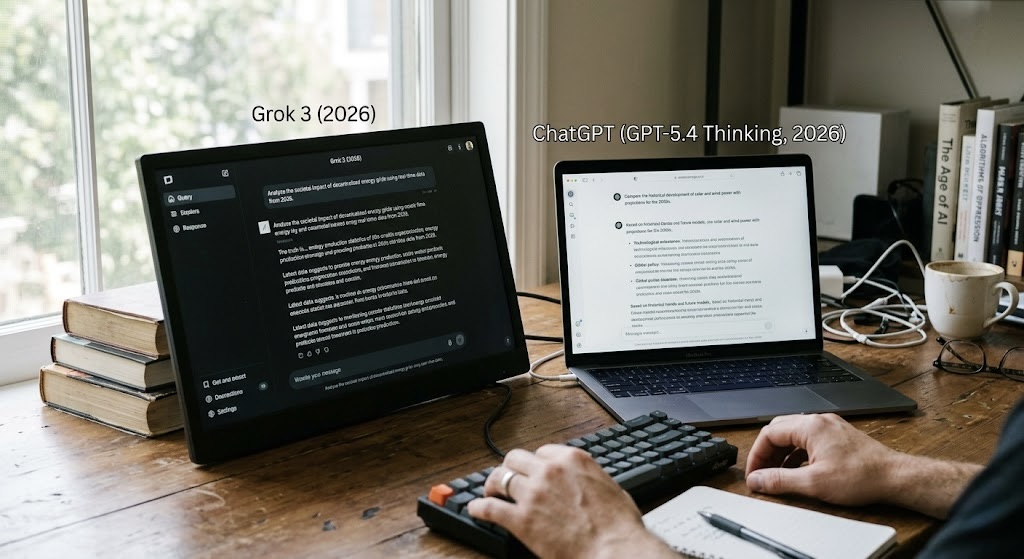
If you have spent any time on X or in tech forums lately, you have probably noticed the same conversation happening over and over. Someone posts their Grok 3 output next to a ChatGPT response on the same prompt, and the difference is hard to ignore. Grok’s answer is faster, more direct, sometimes more accurate on the hard technical stuff, and it actually knows what happened in the news this week.
So the question everyone is quietly asking right now is a real one: Is it actually worth switching from ChatGPT, or is this just another moment where a new model gets hyped for two weeks and then people go back to what they know?
This breakdown uses actual benchmarks, confirmed pricing, and real workflow comparisons as of March 2026. The answer is not the same for everyone, and this article will not pretend it is. What you use daily matters more than which model wins a leaderboard.
What Is Grok 3 and Why Is Everyone Talking About It?
Grok 3 launched on February 17, 2025 from xAI, Elon Musk’s AI company. The training run behind it was genuinely notable: the Colossus supercluster, built in Memphis, used over 200,000 Nvidia H100 GPUs. That is roughly ten times the compute that went into Grok 2. xAI made a point of that number publicly, and the benchmark results when Grok 3 shipped backed up the investment.
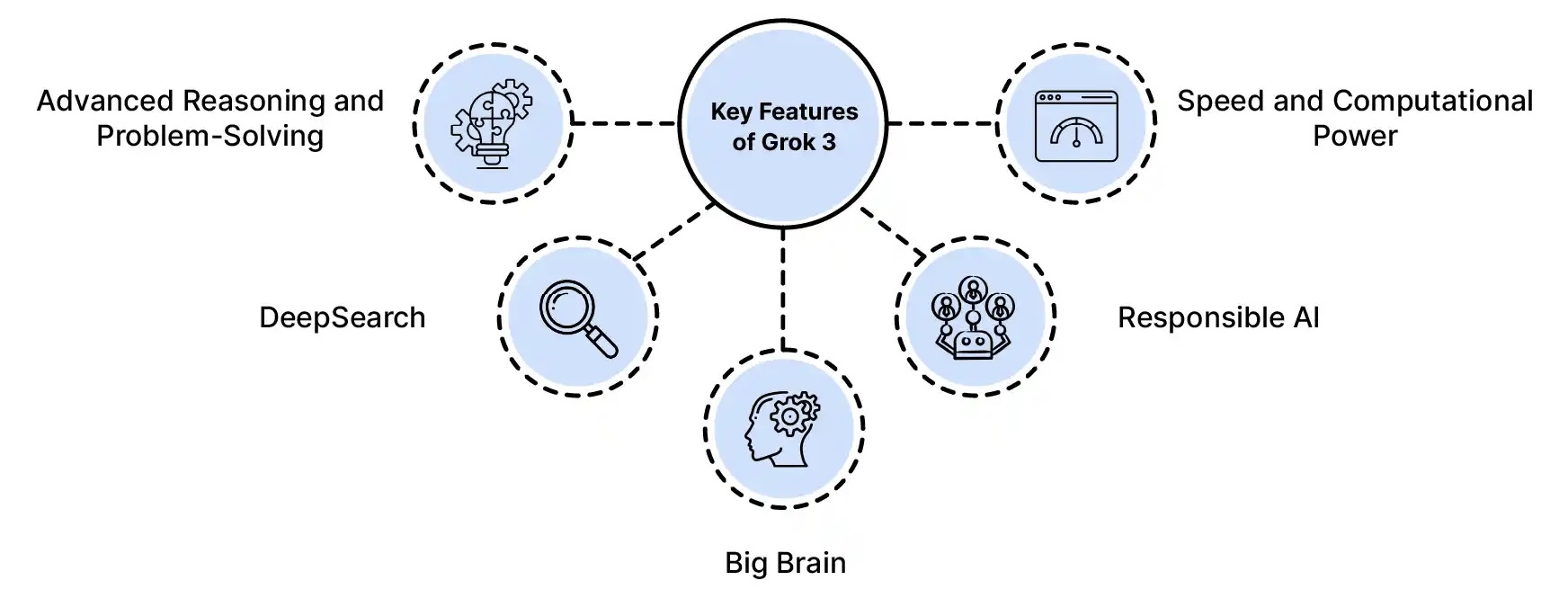
Two features defined the initial release and still define how most people use it. The first is Think mode, which shows you Grok’s reasoning process in real time. You can watch it work through a problem, catch itself making a mistake, backtrack, and try a different approach. For anyone using AI for technical or research work, being able to follow the reasoning is genuinely useful in ways that a straight answer is not. The second is DeepSearch, which combines native web browsing with real-time access to X posts. It is faster than any browser-based search integration that existed before it and actually cites its sources in the output.
Grok 3 (xAI)
ChatGPT (GPT-5.2)
As of early 2026, Grok 3 supports up to a 1 million token context window, though in practical use most people work within 128K to 256K tokens. Vision capabilities are strong and multimodal input works reliably. On math and coding benchmarks it posted some of the highest scores seen at launch, including 93.3% on AIME 2025 and 75.4% on GPQA Diamond, both reported by xAI at release.
Since then xAI has shipped Grok 3.5 and begun previewing Grok 4. The model family is moving fast enough that specific version numbers matter less than understanding what the platform is good at.
ChatGPT in 2026: What GPT-5.2 Actually Means
OpenAI’s flagship is now running on GPT-5.2, which ships in three operational modes depending on what you need. Instant mode prioritizes speed for quick queries and conversational tasks. Thinking mode engages deeper reasoning for problems that require more deliberate processing, similar in concept to Grok’s Think mode. Pro mode removes usage limits entirely for subscribers paying the premium tier price.
The writing quality on GPT-5.2 is the best OpenAI has shipped. Long-form output is more consistent, tone control is more precise, and it handles nuanced creative briefs better than previous versions. Voice mode has improved significantly and now feels usable for extended conversations rather than just quick commands.
The ecosystem around ChatGPT remains its strongest argument. Custom GPTs let individuals and businesses build specialized versions of the model tuned for specific tasks. Canvas provides a document editing environment built directly into the chat interface. Third-party integrations through Zapier and direct API access have been running for long enough that entire workflows at companies are built on top of them. That kind of infrastructure does not get replaced quickly regardless of what happens with model benchmarks.
The one area where ChatGPT consistently trails Grok is real-time knowledge. Web browsing works but feels slower and less integrated than Grok’s native DeepSearch. If your work involves staying current with fast-moving news or markets, that gap is noticeable in daily use.
Head-to-Head: The Full Comparison
| Category | Grok 3 | ChatGPT (GPT-5.2) | Edge in 2026 |
|---|---|---|---|
| Reasoning and Math | 93.3% AIME 2025, 75.4% GPQA Diamond at launch; Think mode shows working | Strong structured reasoning, slightly behind on hardest benchmark problems | Grok 3 on hardest problems |
| Coding | High LiveCodeBench scores, fast agentic coding, good at multi-file tasks | Polished output, excellent ecosystem support, Canvas integration | Tie, depends on workflow |
| Real-Time Knowledge | Native X integration plus DeepSearch, fast, cited sources | Web browsing available but slower and less integrated | Grok 3 clearly |
| Writing and Creative Output | Direct, confident, occasionally blunt | More polished, better tone control, more consistent over long documents | ChatGPT for professional writing |
| Context Window | Up to 1 million tokens | 128K to 400K depending on tier | Grok 3 on paper, similar in practice |
| Ecosystem and Integrations | Growing, currently X-focused, API available | Mature ecosystem, Custom GPTs, Canvas, Zapier, enterprise tools | ChatGPT significantly |
| Tone and Guardrails | More direct, fewer refusals on edgy or controversial prompts | More cautious, consistent safety behavior | Subjective, depends on what you need |
Where Grok 3 Genuinely Has the Edge
DeepSearch is the feature that comes up most consistently when people describe why they switched or added Grok to their workflow. Ask it about something that happened on X in the last 24 hours and it pulls a synthesized answer with sources within seconds. Ask it to research a fast-moving situation like an earnings announcement, a product launch, or a regulatory change and it returns something closer to a research brief than a search result. That capability does not exist in ChatGPT at the same level.
On hard technical problems, particularly competition-level math and rigorous science questions, Grok 3’s Think mode produces noticeably better results than a straight answer would. Being able to follow the chain of reasoning also helps you catch when the model has gone wrong, which is useful in ways that a confident incorrect answer from any model is not. For students working through difficult problems or engineers debugging complex systems, that visibility into the process has real value.
The tone difference is real and matters to some users more than others. Grok is more willing to engage with questions that other models deflect, give direct assessments without excessive hedging, and respond in a way that feels more like a conversation with someone who has an opinion. Whether that is a feature or a bug depends entirely on what you are trying to do.
Where ChatGPT Still Wins
For sustained long-form writing, marketing copy, client deliverables, and anything where the output needs to land well with a real audience, GPT-5.2 is still the more reliable choice. The tone control is better, the output is more consistent over many paragraphs, and it handles complex briefs with multiple constraints more gracefully. Grok’s directness works well for technical and analytical tasks. It works less well when the task requires careful calibration of voice and register.
The ecosystem gap is significant and underappreciated in most comparisons. If your workflow already runs through Custom GPTs, Canvas, or third-party integrations that have been built and tested over the past two years, switching to Grok means rebuilding those workflows from scratch on a platform that does not yet have equivalent tools. That is a real cost that benchmark tables do not capture.
For professional and enterprise use where consistency and predictability matter more than raw capability, ChatGPT’s longer track record and more cautious behavior is actually an advantage. A model that occasionally gives you a sharper answer but sometimes surprises you with unexpected output is harder to build reliable processes around than one that is somewhat less sharp but very consistent.
Pricing in 2026: What You Actually Pay
Both platforms have tiered pricing in 2026. Here is what the tiers actually are:
| Plan | Price | What You Get | Best For |
|---|---|---|---|
| Grok Free | Free | Limited queries on grok.com and X | Occasional use, testing it out |
| SuperGrok | ~$30/mo | Higher usage limits, Grok 3 and 4 access, DeepSearch, Think mode | Regular users who need the full feature set |
| X Premium+ | ~$40/mo | Grok access bundled with X platform perks | Active X users who want both in one subscription |
| Grok API | $3 to $15 per million tokens | Programmatic access for developers | Developers building on top of Grok |
| ChatGPT Plus | $20/mo | GPT-5.2 access, priority response, standard usage limits | Most users, best value entry point |
| ChatGPT Pro | $200/mo | Unlimited usage, all modes, early feature access | Power users, professionals who depend on it daily |
Running both at the entry tier costs around $50 per month total, which many users in technical and research-heavy roles consider reasonable given how much time a better tool saves. The hybrid approach, using Grok for research and real-time queries while keeping ChatGPT for writing and polished output, is genuinely the most common setup among people who have tried both seriously.
Should You Switch? Real Scenarios, Honest Answers
The answer is different depending on what you actually do with these tools every day.
Switch to Grok 3, or add it, if you:
- Do research or analysis that requires current information, whether market data, news, regulatory changes, or anything moving faster than a model’s training cutoff
- Work through hard math, science, or coding problems regularly and want to see the reasoning rather than just the answer
- Find ChatGPT’s refusals or hedging frustrating on topics where you just want a direct answer
- Spend significant time on X and want an AI that understands and pulls from that ecosystem natively
Stay with ChatGPT, or keep it as your primary, if you:
- Produce a lot of written content where consistency, tone control, and polish matter more than raw capability
- Have workflows built around Custom GPTs, Canvas, or integrations that would need to be rebuilt elsewhere
- Work in professional or regulated environments where predictable, conservative AI behavior is a feature rather than a limitation
- Do not need real-time knowledge and find GPT-5.2’s capabilities sufficient for your actual daily tasks
The hybrid approach is worth taking seriously rather than dismissing as indecisive. These models genuinely have different strengths and using the right one for each task type is more useful than being loyal to one platform.
The Downsides Nobody Likes to Admit
Grok’s ecosystem is still considerably smaller than OpenAI’s, and that gap matters more for some workflows than the benchmark comparisons suggest. If you need third-party integrations, specialized tools, or the kind of mature documentation that comes from a platform that has been widely deployed for years, ChatGPT is ahead by a meaningful margin and will be for some time.
Grok’s directness can also work against it. The same tendency that makes it give refreshingly unhedged answers on technical questions can produce responses that are too blunt, occasionally edgy in ways that do not fit professional contexts, or simply overconfident on things it is not actually certain about. The reduced guardrails are a feature for some use cases and a liability for others.
The pace of updates at xAI is fast enough to introduce inconsistencies. Grok 3.5 changed some behaviors that Grok 3 users had built habits around. Grok 4 is already in preview. If you rely on a model behaving consistently in a specific way for a specific task, rapid versioning creates friction. OpenAI moves fast too, but ChatGPT’s version management has more stability tooling for users who need it.
Free tier limits are also tighter on Grok than most people expect when they first try it. The features that make Grok genuinely compelling, Think mode and DeepSearch specifically, are not available without a paid subscription at any meaningful usage level.
Final Verdict
If your work involves real-time research, hard technical problems, or you want an AI that gives you direct answers without extensive hedging, Grok 3 is worth using. If your work centers on polished writing, long-form content, or workflows built on integrations and ecosystem tools, ChatGPT remains the better choice. For most people doing a mix of both, running them together costs around $50 per month and is the most practical answer.
The most useful thing you can do is test them side by side on the actual tasks you do every day rather than on generic benchmark prompts. Ask Grok and ChatGPT the same question you were going to ask anyway this week and compare the results in the context of your real work. Most people who do that for a week end up with a much clearer picture of which tool actually fits their workflow than any comparison article can provide.
The honest summary: Grok 3 is better at some things, ChatGPT is better at others, and both have gotten good enough in 2026 that the differences matter most at the edges of what you are trying to do rather than in the middle.
What is your main daily use case: coding, research, writing, or something else? Drop it in the comments and I will give you a specific recommendation on which tool fits it better.
References:
xAI Grok 3 launch announcement (February 2025): x.ai/news/grok-3
Benchmarks: LMSYS Chatbot Arena, GPQA Diamond, AIME 2025, LiveCodeBench (2025 to 2026)
OpenAI pricing and features (March 2026): chatgpt.com/pricing
Additional comparisons: Analytics Vidhya, Latenode, Emergent.sh (2026 reports)
All pricing and features current as of March 13, 2026. Both platforms update frequently.
The question in 2026 is not which AI is best.
It is which one is best for what you are actually trying to do.






Leave a Reply