Ever wondered what everyone’s searching for right now? Or whether that random topic you’re interested in is actually trending or just something your algorithm fed you? Google Trends has the answers, and it’s way more useful than you’d think.
I stumbled onto Google Trends a while back when I was curious about how popular certain topics really were. Turns out, it’s not just a fun time-waster—it’s actually a powerful research tool that content creators, writers, students, and curious people use to understand search patterns.
Let me walk you through what makes this tool interesting and how you can actually use it.
What Exactly Is Google Trends?
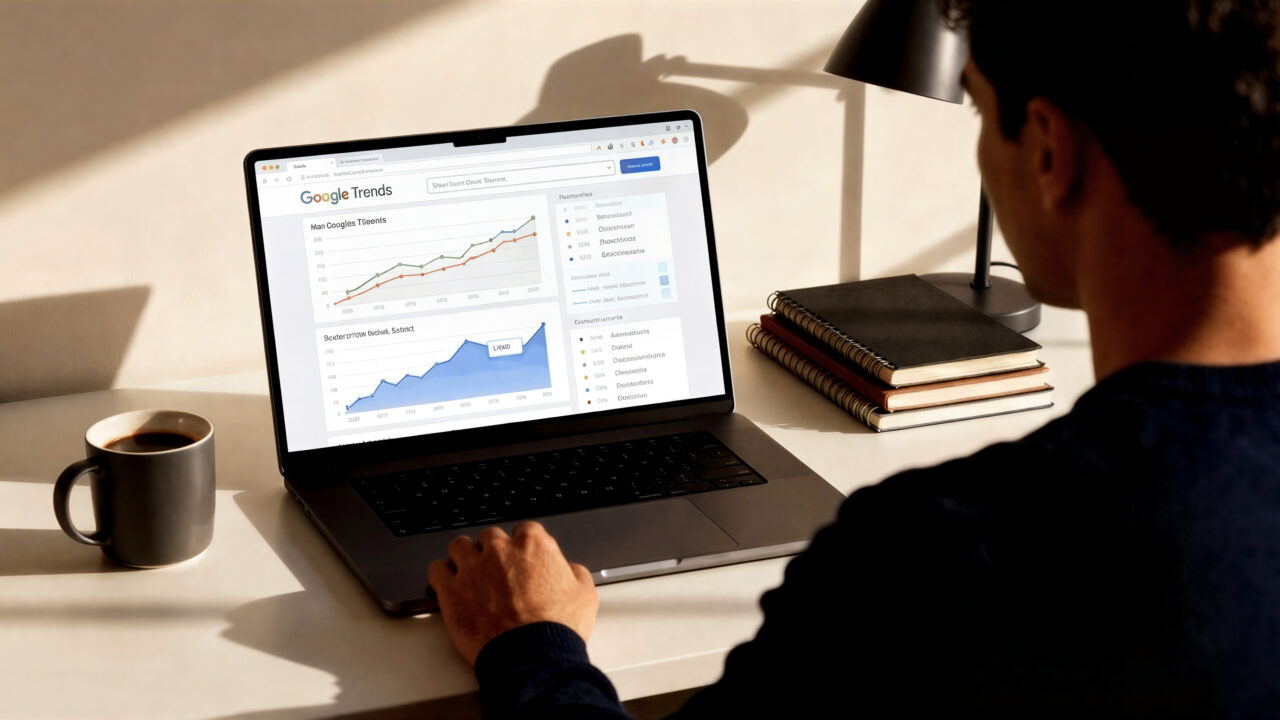
Google Trends is a free tool from Google that shows you what people are searching for in real-time. You type in any topic or keyword, and it shows you how popular that search has been over time, where people are searching for it, and what related topics are trending.
The data is shown on a scale from 0-100, where 100 represents peak popularity for that search term. It’s not showing you the exact number of searches—it’s showing you relative interest over time. This actually makes it easier to spot patterns and compare different topics.
And the best part? It’s completely free. No sign-up required, no premium features locked behind a paywall.
Why This Matters (Even If You’re Not a Marketer)
You might be thinking, “Why would I care about search trends?” Fair question. Here’s where it gets interesting:
For Writers and Bloggers: You can figure out what people are actually curious about before you spend hours writing something nobody’s searching for.
For Students and Researchers: You can track public interest in topics over time, see regional differences, and gather real data for papers or projects.
For Job Seekers: You can see which skills and industries are trending upward, helping you decide where to focus your learning.
For Content Creators: You can spot emerging trends before they blow up, giving you a head start on creating content about them.
For the Generally Curious: You can settle debates about what’s actually popular versus what just feels popular because of your social media bubble.
Finding Out What’s Actually Trending
The “Trending Now” section shows you what people are searching for right this second. You can filter by timeframe—past 4 hours, 24 hours, or 7 days.
I check this whenever I want to know what’s actually happening in the world beyond my Twitter feed. It’s fascinating how different the real search trends are from what’s trending on social media. Sometimes they overlap, but often they’re completely different.
For example, while tech Twitter might be obsessing over some new AI feature, Google Trends might show that way more people are searching for “how to fix a leaky faucet” or “best chocolate chip cookie recipe.” It gives you perspective on what regular people care about.
Comparing Topics to Settle Debates
One of my favorite features is the comparison tool. You can compare up to five different search terms at once to see which is actually more popular.
Wondering if more people search for “climate change” or “global warming”? Throw both into Google Trends and see. Curious whether “remote jobs” is more popular than “work from home jobs”? Compare them.
This is particularly useful when you’re deciding what to write about or which topic to explore. Instead of guessing, you get actual data about what people are searching for more often.
Discovering Seasonal Patterns
This is where Google Trends gets really interesting. You can see exactly when people search for certain things throughout the year.
For instance, searches for “running shoes” spike every spring. “Gift ideas” obviously peaks in November and December. “Sunscreen” searches climb in May and June. “Tax tips” surges every April.
Even weirder patterns emerge. Searches for “ice cream” peak on weekends. “Pay rent” spikes on the 1st of every month. These patterns reveal how people’s lives and search habits follow predictable rhythms.
If you’re a content creator, this is gold. You can plan what to write about months in advance by looking at what tends to trend at different times of the year.
Regional Differences Are Wild
Google Trends breaks down search interest by location—countries, states, even cities. The regional differences are honestly fascinating.
Sometimes a topic that seems huge in one area barely registers in another. For example, certain sports or cultural topics might be massive in one state but unknown in another. If you’ve ever wondered whether your interests are universal or regional, this will show you.
This is also useful if you’re creating content and want to know where your potential audience actually is. You might discover that most interest in your topic comes from unexpected places.
Finding Related Topics You Didn’t Know About
At the bottom of every Google Trends search, there’s a “Related Topics” and “Related Queries” section. This is where you discover stuff you didn’t even know to look for.
Let’s say you search for “meditation.” The related topics might show you “mindfulness,” “breathing exercises,” “yoga for beginners,” or specific meditation apps that are trending. Each of these becomes a potential rabbit hole to explore.
The “Rising” section is especially interesting—it shows you related searches that have suddenly spiked in popularity. This is how you catch onto new trends before they become mainstream.
Real Example: Catching a Trend Early
Last year, I was randomly browsing Google Trends in the fitness category and noticed “Hyrox” showing up as a breakout trend. I’d never heard of it.
Turns out, Hyrox is an obstacle course racing competition that was starting to gain serious traction. The search data showed rising interest, but most people weren’t talking about it yet.
Fast forward a few months, and Hyrox is everywhere in the fitness world. The people who caught onto it early—whether writing about it, creating content, or even just trying it themselves—were ahead of the curve.
That’s the power of spotting trends before they explode: you get to be part of the early wave instead of showing up late.
How I Actually Use It
Here’s my simple approach whenever I’m researching a topic:
Step 1: I search for my main topic and look at the 5-year view. Is this topic growing, stable, or dying out?
Step 2: I check the related topics and queries to see what else people are interested in around this subject.
Step 3: I look at the geographic breakdown. Where is this topic most popular?
Step 4: If it’s relevant, I check seasonal patterns. Does interest in this topic spike at certain times of year?
Step 5: I compare it against similar topics to see what’s actually more popular.
The whole process takes maybe 10 minutes, but it gives me way more insight than just guessing.
The YouTube Search Filter (Underrated Feature)
Most people don’t realize this, but Google Trends lets you filter by different search channels. You’re not just seeing regular Google Search—you can specifically check YouTube Search, Google News, and Google Shopping.
This matters because YouTube trends are completely different from general search trends. A topic might be huge on YouTube but barely searched on Google, or vice versa.
If you’re thinking about creating video content, checking YouTube Search trends specifically will tell you what people are actually looking for on that platform.
What Makes This Different From Social Media Trends
Social media algorithms show you what’s trending in your bubble. Google Trends shows you what everyone—across different demographics, regions, and interests—is actually searching for.
I’ve found that Google Trends gives me a more grounded view of what people care about. Social media amplifies controversy and virality. Google Search reflects genuine curiosity and information-seeking.
Both are useful, but they’re showing you different things. Google Trends is where you go when you want to know what people are genuinely interested in learning about, not just what’s making them angry or entertained.
Why More People Should Know About This
Google Trends feels almost too simple to be useful, which is probably why it flies under the radar. There’s no flashy interface, no AI recommendations, just clean data visualization and search patterns.
But that simplicity is the point. You’re getting unfiltered access to what billions of people are searching for, organized in a way that’s actually useful.
Whether you’re trying to decide what to write about, researching a topic for school, planning content, or just satisfying your curiosity about what people care about, Google Trends gives you real answers.
My Honest Take
I’m not saying Google Trends will change your life. But it’s one of those rare tools that’s genuinely useful, completely free, and doesn’t require any expertise to use.
Next time you’re curious about whether something is actually trending or just feels that way, check Google Trends. Next time you’re stuck on what topic to explore, browse the trending searches. You’ll probably discover something interesting.
It takes 5 minutes to learn and might just change how you think about what people actually care about in the world.