
The technology landscape is experiencing rapid transformation this November, with groundbreaking developments across artificial intelligence, cloud infrastructure, cybersecurity, and networking. From Google’s Gemini 3 setting new intelligence standards to the emergence of AI-powered malware, organizations worldwide are navigating both unprecedented opportunities and evolving threats.
AI & Machine Learning: A New Era of Intelligence
Google Gemini 3 Redefines AI Capabilities
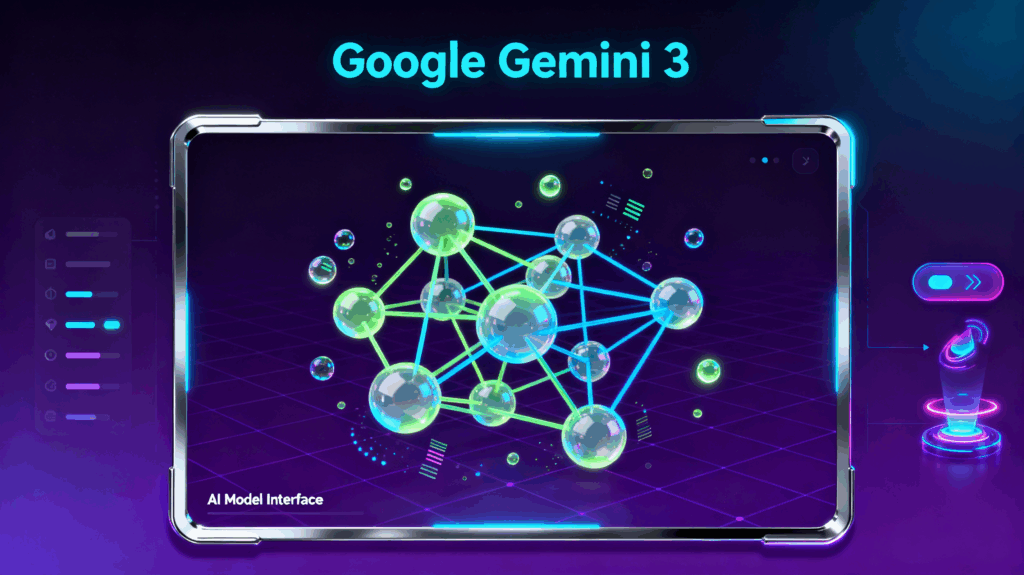
Google has unveiled Gemini 3, marking what the company calls “a new era of intelligence”. Released on November 18, 2025, Gemini 3 Pro represents the most significant advancement in AI reasoning and multimodal understanding to date. The model combines state-of-the-art reasoning capabilities with enhanced ability to understand context and intent, requiring less prompting from users.
Gemini 3 achieves unprecedented performance on major AI benchmarks, significantly outperforming its predecessor, Gemini 2.5 Pro. The enhanced Deep Think mode pushes boundaries even further, achieving 41.0% on Humanity’s Last Exam and 93.8% on GPQA Diamond without tool use. Most impressively, it reaches 45.1% on ARC-AGI-2 with code execution, demonstrating its ability to solve novel challenges that require genuine reasoning.
Google deployed Gemini 3 across its ecosystem from day one—a first for the company. The model is now available in AI Mode in Search, the Gemini app, AI Studio, Vertex AI, and Google’s new agentic development platform, Google Antigravity. For enterprises, Gemini 3 on Vertex AI and Gemini Enterprise enables teams to learn, plan, and build with superior multimodal capabilities.
OpenAI Advances with GPT-5.1 and Codex Innovations
OpenAI released GPT-5.1 on November 19, 2025, upgrading GPT-5 with advanced reasoning and more user-friendly conversational tone. Early testing showed users consistently preferred GPT-5.1 Pro over GPT-5 Pro, rating it especially highly for writing help, data science, and business questions. The model delivers improved clarity, relevance, and structure in responses.
Alongside GPT-5.1, OpenAI introduced GPT-5.1-Codex-Max, a frontier agentic coding model designed for long-running software engineering tasks spanning millions of tokens and multi-hour sessions. The model’s groundbreaking “compaction” feature enables it to work autonomously for over 24 hours on a single task by repeatedly compressing its interaction history while preserving essential context.
GPT-5.1-Codex-Max achieves higher accuracy than GPT-5.1-Codex on SWE-bench Verified while using 30% fewer thinking tokens at medium reasoning effort. The model introduces native Windows environment support and is trained on real-world software engineering workloads including PR creation, code review, and frontend coding.
xAI’s Grok 4.1 Sets New Standards for Conversational AI
xAI released Grok 4.1 in November 2025, focusing on emotional intelligence, conversational quality, and reduced hallucinations. The model comes in two configurations: Grok 4.1 Thinking (with explicit reasoning) and a faster non-thinking variant. Both currently hold the top two positions on LMArena’s Text Arena leaderboard with 1483 and 1465 Elo respectively—31 points above the strongest non-xAI model.
Grok 4.1 achieved a 64.78% win rate over its predecessor in blind user evaluations. The model shows significant reductions in hallucinations on information-seeking prompts, confirmed both on internal production traffic and the FActScore factuality benchmark. xAI deployed the model through a silent rollout between November 1-14, 2025, progressively shifting production traffic to test variants before full release.
Meta Unveils SAM 3 and SAM 3D for Advanced Segmentation

Meta released Segment Anything Model 3 (SAM 3) on November 19, 2025, introducing text-based prompting to the Segment Anything family. SAM 3 enables users to detect, segment, and track objects in images and videos using text prompts like “yellow school bus” or visual examples. The model processes an image with over 100 detected objects in approximately 30 milliseconds on an H200 GPU.
SAM 3 roughly doubles the performance of previous systems on Meta’s SA-Co benchmark for open-vocabulary concept detection and segmentation. Alongside SAM 3, Meta introduced SAM 3D, which reconstructs objects, scenes, and full human bodies in three dimensions from a single 2D image. These capabilities open new applications across computer vision, robotics, media editing, and creative workflows.
Cloud & DevOps: Automation, Security, and Intelligence
AI Integration Transforms DevOps Practices
Artificial Intelligence has become integral to DevOps practices in 2025. Organizations leverage AI for predictive analytics, anticipating system failures before they occur. This proactive approach minimizes downtime and enhances operational efficiency. AI-driven DevOps tools now detect system anomalies and automatically resolve issues without human intervention through self-healing systems.
Machine learning algorithms automatically generate test cases based on code changes, drastically reducing manual test creation and speeding up CI/CD pipelines. The rise of NoOps—where IT operations are automated with minimal human intervention—represents one of the most prominent DevOps trends, utilizing serverless computing, AI-driven auto-healing infrastructure, and self-managed Kubernetes clusters.
Serverless and Cloud-Native Architectures Gain Momentum
Serverless computing and cloud-native architectures continue as major focus areas for DevOps teams in 2025. Serverless platforms like AWS Lambda, Azure Functions, and Google Cloud Functions allow teams to focus on application logic while the platform automatically scales to meet demand. Cloud-native tools such as Kubernetes, Docker, and Prometheus help teams adopt microservices-based architecture, enabling greater scalability and resilience.
Event-driven architectures intrinsically tied to serverless computing ensure resources are used efficiently and applications scale effortlessly. Organizations increasingly embrace strategic hybrid and multi-cloud approaches driven by compliance, sovereignty, and business continuity requirements. Regional cloud providers are emerging beyond the “big three,” with Kubernetes serving as the de facto substrate for cross-cloud operations.
DevSecOps Embeds Security Throughout Development Lifecycle
DevSecOps in 2025 emphasizes integrating security measures throughout the software development lifecycle. By shifting security left, organizations identify and address vulnerabilities early in the development process. Key practices include Static Application Security Testing (SAST), Software Composition Analysis (SCA), and Dynamic Application Security Testing (DAST).
AI-driven security tools analyze vast amounts of code and threat intelligence data to identify complex vulnerability patterns traditional scanners might miss. Infrastructure as Code (IaC) scanning has become non-negotiable, with deeper integration directly into CI/CD pipelines to automatically check for security misconfigurations, compliance violations, and exposed secrets before infrastructure deployment.
Organizations place greater emphasis on securing every link in their software supply chain through Software Bill of Materials (SBOM) generation and verification, dependency signing, and container image signing. Unified platforms providing visibility across both code and cloud enable teams to understand the complete risk picture and prioritize vulnerabilities based on real-world impact.
Cybersecurity: Emerging Threats and Defense Strategies
AI-Powered Malware Marks New Phase in Cyber Threats
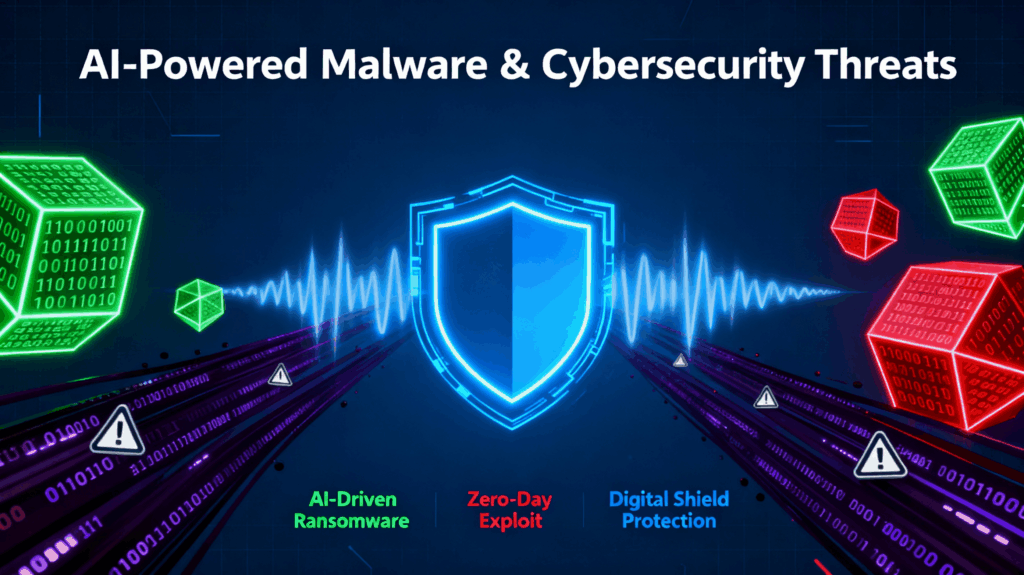
Google’s Threat Intelligence Group reported in November 2025 that adversaries now use generative AI and on-the-fly code generation in malware families, enabling dynamic behavior mutation and improved evasion. Google identified at least five malware families—FRUITSHELL, PROMPTFLUX, PROMPTSTEAL, PROMPTLOCK, and QUIETVAULT—exhibiting novel AI-powered capabilities.
These malware strains can hide their code from security software, create attack capabilities on demand, and dynamically generate scripts. PROMPTFLUX and PROMPTSTEAL use large language models during execution to adapt their tactics in real-time, representing “a significant step toward more autonomous and adaptive malware”. The discovery marks a fundamental shift in threat actor capabilities, rendering detection models and signature-based systems increasingly inadequate.
AI-powered malware demonstrates adaptive evasion, altering behavior dynamically to bypass existing cybersecurity measures. Unlike traditional malware relying on static attack patterns, these AI threats learn from encounters with defense systems, continuously optimizing their approaches. The agentic learning capabilities enable malicious software to develop new attack strategies without human input.
Major Security Breaches Highlight Persistent Vulnerabilities
November 2025 brought troubling incidents including insider threats, social engineering attacks, and widespread ransomware campaigns. The Department of Justice indicted three cybersecurity professionals for allegedly conducting ransomware attacks against at least five companies while employed to help victims negotiate with threat actors. The defendants allegedly received over $1.2 million in ransom payments from a Florida medical device company alone.
DoorDash confirmed a breach in mid-November exposing customer, delivery worker, and merchant contact information following a social engineering attack on October 25, 2025. An employee fell victim to a cyber scam granting attackers access to internal systems. Compromised information included names, email addresses, phone numbers, and physical addresses for millions of users across multiple countries.
The Cl0p ransomware group targeted Oracle E-Business Suite customers, naming nearly 30 organizations as victims including The Washington Post, Logitech, Harvard University, Cox Enterprises, and Pan American Silver. The campaign exploited CVE-2025-61882, a critical vulnerability affecting Oracle EBS versions 12.2.3 through 12.2.14 that allows unauthenticated remote code execution.
Legislative and Security Framework Updates
Senator Bill Cassidy introduced the Health Information Privacy Reform Act (HIPRA) on November 4, 2025, seeking to extend HIPAA-like protections to applicable health information collected by organizations not currently regulated by federal healthcare law. The legislation would create new requirements for “regulated entities” collecting private healthcare-related information that don’t qualify as HIPAA-covered entities or business associates.
Security experts emphasize that cybersecurity incidents from November 2025 reflect how threats continue exploiting human error and technical vulnerabilities, creating the need for diligence to maintain adequate security posture. Organizations require expert teams and solution provider networks to harden cyber defenses against modern and emerging threats and secure critical systems from known hacking techniques.
Networking: 5G Advanced and AI-Driven Infrastructure

5G Advanced Rollout Accelerates Globally
5G Advanced (5G-A), based on 3GPP Release 18 standards, is emerging as the next evolutionary step beyond initial 5G rollout. The introduction of 5.5G (also known as 5G Advanced) brings increased speeds and functionalities, with deployment in leading markets throughout 2025. The global 5G services market is set to reach an annual growth rate of 59.4% by 2030.
5G Advanced provides smart connectivity including services focusing on uplink communication and connecting people moving at high velocities, such as those on trains and planes. The technology efficiently supports highly immersive and interactive applications widely deployed in entertainment, training, and education sectors. Commercial 5G-A adoption is expected to accelerate in China, the Middle East, and Asia-Pacific, with carriers actively exploring experience monetization models.
Ericsson’s 5G Advanced features promise unprecedented network performance, intelligent automation capabilities, differentiated connectivity through network slicing and APIs, and new service opportunities transforming industries and consumer experiences. However, deployment requires strategic alignment across technical and operational domains, including 5G standalone core infrastructure, enhanced RAN hardware, mid-band spectrum access, and upgraded transport infrastructure.
AI Networking and Edge Computing Transform Infrastructure
AI networking has become substantial in 2025, with networking solutions increasingly reliant upon artificial intelligence for optimization, maintenance, and analytical purposes. AI networking bolsters capabilities within industries to develop robust and efficient networks supporting operations. AIOps (AI for IT Operations) enables automated network management, predictive maintenance, and real-time optimization.
Edge computing gains prominence as a means to support organizations processing data closer to sources or users—at the network edge. Both edge and content delivery networks minimize latency and enhance real-time processing capabilities not possible purely via public cloud. By processing data at the network edge, strain on network bandwidth is alleviated.
Intent-based networking (IBN) has grown rapidly in popularity, using automation and AI to simplify network management. This technology allows administrators to define network intent and automatically translate and implement these intentions across infrastructure to optimize performance, security, and scalability. Multi-cloud networking environments have become the practical default for enterprises, with tools enabling networking and connectivity across cloud environments mitigating limitations of traditional network architecture.
Programming & Development: New Tools and Language Trends
Programming Language Rankings Shift Dramatically
The TIOBE Index for November 2025 reveals C# as the fastest rising language, potentially becoming the TIOBE programming language of the year 2025. C# has removed nearly every reason not to use it instead of Java—it’s cross-platform, open source, and contains all new language features developers want. While the financial world remains dominated by Java, all other terrains show equal shares between Java and C#.
Currently, the difference between C# and Java is less than 1%, and C# has never been higher than Java in the TIOBE index history. Python continues to lead with 23.37% ratings, though growth has plateaued compared to previous years. C holds second position with 9.68%, showing steady growth.
Developer Tools Embrace AI Integration
Epic Games released Unreal Engine 5.7 for building lifelike worlds, featuring enhanced capabilities for immersive environment creation. Microsoft announced Visual Studio 2026 and .NET 10 with AI-native tools and quantum security features, demonstrating the industry’s commitment to integrating artificial intelligence throughout development workflows.
JetBrains teaches developers how to use AI coding tools effectively, recognizing that AI is changing what it means to be a software engineer. The transition requires developers to learn new skills around prompt engineering, AI model selection, and effectively collaborating with AI assistants rather than replacing traditional programming knowledge.
Open-source developer burnout continues fueling supply chain risks, highlighting the need for sustainable development practices and better support for maintainers of critical infrastructure. Software projects increasingly face challenges with timelines, costs, and relevance, requiring organizations to rethink project management approaches in the AI era.
Quantum Computing: Breakthroughs Accelerate Practical Applications

Major Hardware and Algorithm Advances
Google announced the Quantum Echoes algorithm breakthrough, demonstrating the first-ever verifiable quantum advantage running the out-of-order time correlator algorithm, which runs 13,000 times faster on Willow than on classical supercomputers. Google’s Willow quantum chip, featuring 105 superconducting qubits, achieved exponential error reduction as qubit counts increased—demonstrating the critical “below threshold” phenomenon.
IBM unveiled its fault-tolerant roadmap centered on the Quantum Starling system targeted for 2029, featuring 200 logical qubits capable of executing 100 million error-corrected operations. IBM announced Quantum Nighthawk, its most advanced quantum processor designed to deliver quantum advantage by the end of 2026. Nighthawk offers 120 qubits linked with 218 next-generation tunable couplers, over 20% more than IBM Quantum Heron.
Microsoft introduced Majorana 1, a topological qubit architecture built on novel superconducting materials designed to achieve inherent stability requiring less error correction overhead. In collaboration with Atom Computing, Microsoft demonstrated 28 logical qubits encoded onto 112 atoms and successfully created and entangled 24 logical qubits—the highest number on record.
Convergence Toward Practical Quantum Applications
In March 2025, IonQ and Ansys achieved a significant milestone by running a medical device simulation on IonQ’s 36-qubit computer that outperformed classical high-performance computing by 12 percent—one of the first documented cases of quantum computing delivering practical advantage in a real-world application. Research institutions identified convergence points where quantum computing could address significant scientific workloads within five to ten years.
Materials science problems involving strongly interacting electrons and lattice models appear closest to achieving quantum advantage, while quantum chemistry problems have seen algorithm requirements drop fastest as encoding techniques improve. The quantum computing industry in 2025 stands at a genuine inflection point, transitioning from asking “if” quantum computing will be useful to “when” and “which applications will benefit first”.
Looking Ahead: Key Takeaways for Technology Leaders
The November 2025 technology landscape demonstrates several critical trends:
AI Models Mature Rapidly: Gemini 3, GPT-5.1, and Grok 4.1 represent significant leaps in reasoning, multimodal understanding, and conversational quality. Organizations must evaluate how these capabilities can enhance customer experiences, operational efficiency, and product development.
Security Requires Proactive Evolution: AI-powered malware demands adaptive defense strategies. Traditional signature-based detection is becoming obsolete against threats that learn and evolve in real-time. DevSecOps practices must integrate AI-driven security tools and maintain comprehensive supply chain visibility.
Cloud and Edge Infrastructure Converge: Multi-cloud strategies combined with edge computing and 5G Advanced enable new categories of real-time, latency-sensitive applications. Success requires strategic infrastructure decisions balancing performance, compliance, and cost.
Quantum Computing Approaches Practicality: While mainstream quantum applications remain years away, recent breakthroughs in error correction and documented quantum advantage cases signal that organizations should begin understanding potential use cases and preparing strategies.
The pace of technological change continues accelerating. Organizations that actively monitor developments, pilot emerging technologies, and cultivate adaptive technical cultures will be best positioned to capitalize on opportunities while mitigating risks in this rapidly evolving landscape.